
Planning guide
Nepali Wedding Day Timeline: An Hour-by-Hour Plan for Photos and Film
A sample hour-by-hour Nepali Hindu wedding day for photos and film: getting ready, janti, swayamvar, kanyadaan, sindoor, bidaai and the reception, with tips.
A Nepali wedding day is a relay. It starts in two homes at once, moves with the janti to the bride’s venue, runs through rituals whose times the priest has fixed, and ends with the bidaai, the welcome at the groom’s home and, often, a reception.
Below is a sample timeline for a one-day Hindu wedding with a late-morning sait, and what the photographers and film team do at each stage. Your priest’s sait decides the real times, and the order and names of rituals differ between families and communities, so treat it as a template to adapt.
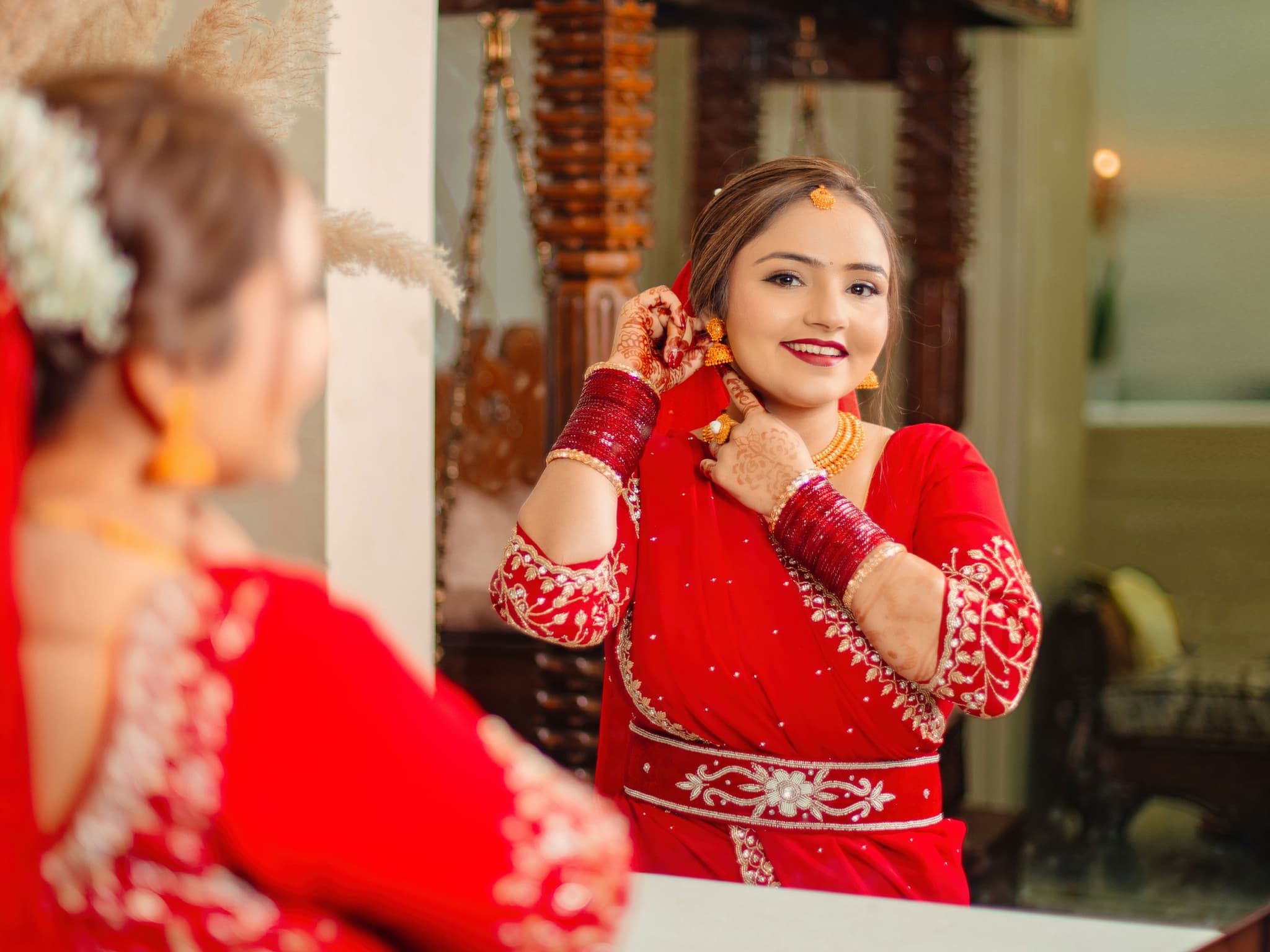
How a Nepali wedding day is structured
The day has three movements. First, preparations in two homes at the same time. Second, the janti’s journey to the bride’s venue and the rituals there, timed to the sait. Third, the bidaai and the bride’s welcome at the groom’s home, with a reception the same evening or another day.
The photography plan follows those three movements. Most problems come from treating the day as one event in one place.
Before the day: haldi, mehendi and the night before
Haldi and mehendi usually happen at home in the day or two before the wedding. They are relaxed, colourful and full of family, and many couples book a few hours of coverage for them. If they are on separate days from the wedding, they need their own time in the photography plan and the quote.
Morning: getting ready on both sides
The bride’s make-up, dressing and jewellery take two to three hours, and the groom’s family is preparing at the same time. One photographer cannot be in both places, which is why most Nepali weddings need two. Details are photographed first, while the rooms are quiet: rings, jewellery, the sari or lehenga, the groom’s daura suruwal and topi.
The janti: departure and arrival
The janti leaves the groom’s home with the band and the family, and arrives at the bride’s venue to a formal welcome. The departure, the procession and the arrival are some of the liveliest moments of the day, and the ones where a film adds most: music, dancing and movement.
Swayamvar and the main rituals
Swayamvar, when the bride garlands the groom, opens the ceremony. The main rituals follow at the sait: kanyadaan, sindoor and pote, and saptapadi. They happen once, and some of them are over in seconds. Agree with the priest where the photographers can stand, keep the space in front of the couple clear of phones, and let the team work quietly.
Family groups and couple portraits: finding the time
Family groups take longer than anyone expects. Write the list in advance, from the couple with each set of parents to the whole extended family, and ask one relative from each side to gather people. Thirty to forty-five minutes is realistic.
Couple portraits need twenty minutes away from the crowd. After the main rituals and the meal is usually the easiest window; if the sait is late, plan a short session the next day.
The bidaai
The bidaai, when the bride leaves her family with the janti, is the most emotional moment of the day. Nothing else should be scheduled at the same time. The photographers stay close and quiet, and the film team keeps the sound: it is the part of the film families watch most.
At the groom’s home, and the reception
At the groom’s home the bride is welcomed into the house (bhitryaune), and relatives see her face and bless her (mukh herne). These happen indoors, often in the evening, so the team needs lighting. A reception may follow the same night or on another day; entrances, speeches and dancing need stage lighting and, ideally, the same team.
Night saits and multi-day weddings
When the sait is at night, the timeline shifts: preparations in the afternoon, rituals after dark, and the bidaai late. Plan a daylight couple session for another day. For two- or three-day weddings, each day needs its own timeline, and the same team on every day keeps the story consistent.
A sample wedding day (late-morning sait)
Times are an example for a one-day Hindu wedding. Shift the whole plan to your own sait.
| Time | What happens | Photo and film |
|---|---|---|
| 7:00 | Hair, make-up and dressing begin on the bride’s side; the groom’s family prepares at home | One photographer on each side; details of jewellery, clothes and rings |
| 9:00 | The janti leaves the groom’s home with the band | Groom’s-side photographer travels with the janti |
| 10:00 | The janti arrives; the bride’s family welcomes the groom | Both photographers together; the film team takes the arrival and the music |
| 10:45 | Swayamvar: the bride garlands the groom | Two angles, both faces; clear the phones from the front |
| 11:30 | Main rituals at the sait: kanyadaan, sindoor and pote, saptapadi | Positions agreed with the priest; no flash in the face during key moments |
| 14:00 | Meal; blessings from relatives | Candid coverage; this is when family groups fit best |
| 15:00 | Family groups and couple portraits | 30 to 45 minutes for groups, 20 minutes for the couple |
| 16:30 | Bidaai: the bride leaves with the janti | Stay close and quiet; the film team keeps the sound |
| 18:00 | Welcome at the groom’s home (bhitryaune) and mukh herne | Low light: lighting needed indoors |
| 19:30 | Reception, if held the same evening | Entrances, speeches, dancing; lighting for the stage |
Timeline checklist
- Get the sait for each ritual from the priest and build the day around them.
- Book one photographer for each side for the morning preparations.
- Share the janti’s departure time and route with the team.
- Write the family group list and choose a relative from each side to gather people.
- Put 20 minutes of couple portraits into the schedule.
- Keep nothing else scheduled during the bidaai.
- Arrange lighting for the evening rituals at the groom’s home and the reception.
- Send the final timeline to the photographer a week before the wedding.
Send us your timeline
Share your saits and venues and we will suggest the coverage, the team and the hours your day needs.
Sources and further reading
We use primary or specialist references for historical, technical, legal, and trend-sensitive claims. Prices and rules can change, so verify decisions with the relevant provider or authority.
Nepali Wedding Day Timeline: An Hour-by-Hour Plan for Photos and Film: questions answered
How long is a Nepali wedding day?+
A one-day Hindu wedding usually runs from early morning preparations to the evening welcome at the groom’s home, ten to twelve hours or more. Many weddings add haldi, mehendi or a reception on other days.
What time does a Nepali wedding start?+
It depends on the sait the priest gives. The main rituals can be in the morning, the afternoon or at night, and the rest of the day is planned backwards and forwards from them.
How many hours of wedding photography do we need?+
For a one-day wedding from preparations to the bidaai, eight to ten hours. Our packages: Bronze 6 hours (NPR 75,000), Silver 8 hours (NPR 110,000), Gold 10 hours (NPR 160,000), Platinum full 2-day coverage (NPR 300,000).
What is the janti?+
The janti is the groom’s wedding party: family and friends who travel with him, usually with a band, from his home to the bride’s venue.
When should family photos be taken at a Nepali wedding?+
After the main rituals, usually around the meal, when both families are present and relaxed. Write the group list in advance and allow thirty to forty-five minutes.
Do we need two photographers?+
For most Nepali weddings, yes: the bride’s and the groom’s preparations happen at the same time in different places, and during the rituals one photographer stays with the ceremony while the other follows the families.
What happens at the bidaai?+
The bride says goodbye to her family and leaves with the groom and the janti. It is the most emotional part of the day, and it should have the photographers’ full attention.
What is mukh herne?+
At the groom’s home, relatives see the new bride’s face, bless her and give gifts. It usually happens in the evening, indoors, so the photographers need lighting.
What if our sait is at night?+
Move the preparations to the afternoon, plan lighting for the rituals, and book a short daylight couple session for the day before or after the wedding.
When should we send the timeline to the photographer?+
A draft when you book, and the final version with every sait, address and contact person about a week before the wedding.