
Wedding planning guide
Wedding Season in Nepal 2083 (2026–27): Months, Sait and When to Book
The 2083 wedding season in Nepal month by month: which months carry wedding saits, their AD dates, the light and weather, and when to book a photographer.
Nepal’s wedding calendar is set by the saits, the auspicious dates and times that priests and calendar makers work out from the lunar calendar, not by the weather. That is why one Saturday in Mangsir can see thousands of weddings across the country while a pleasant week in October sees almost none.
This guide sets the Bikram Sambat 2083 months against their Gregorian dates, marks the months that usually carry wedding saits, explains what each month means for the photographs, and gives a booking timeline. It is written by a wedding studio with studios in Butwal and Kathmandu; where it describes our own work, it says so.
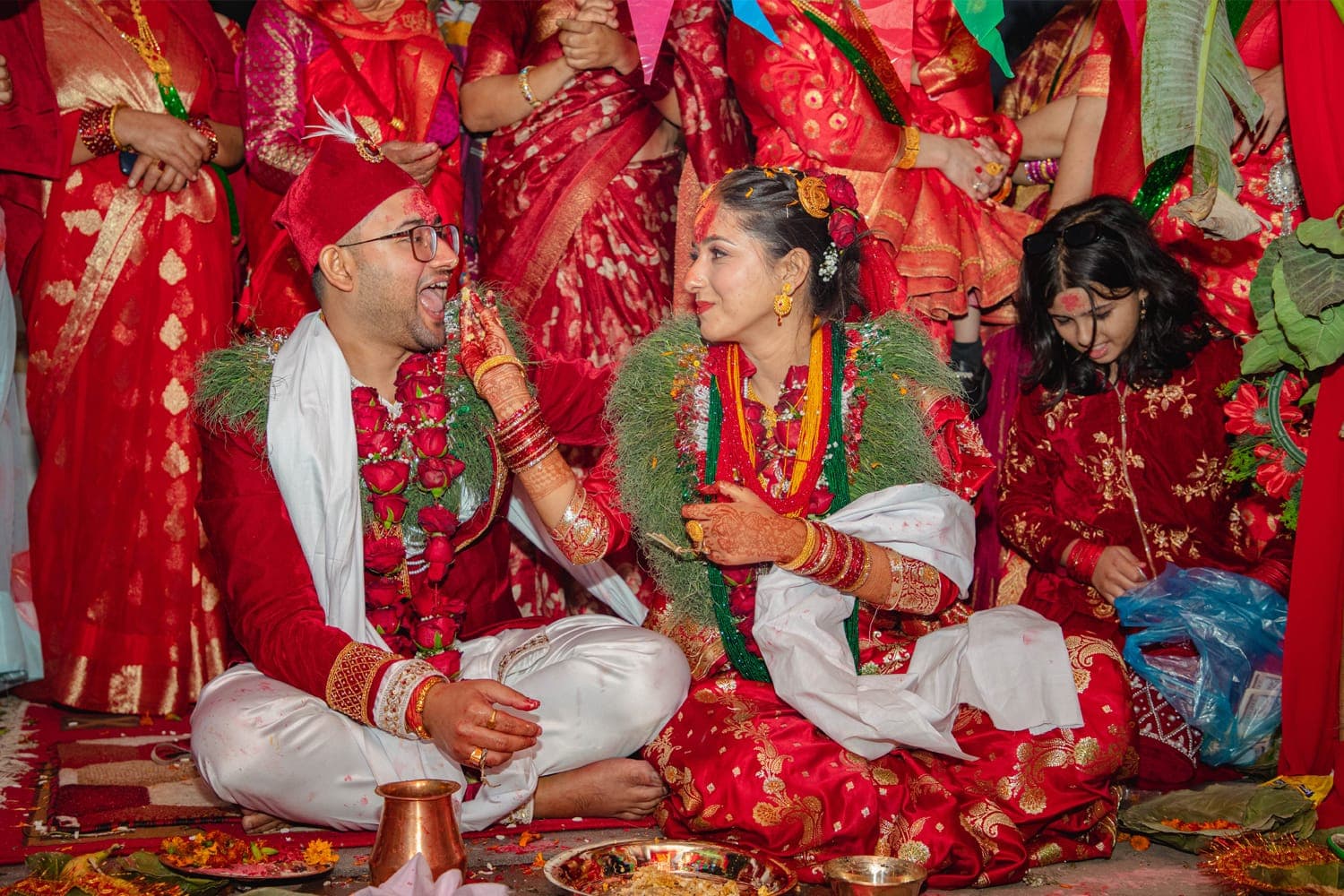
When is the wedding season in Nepal?
Nepal has two wedding seasons. The winter season starts at the end of Kartik, peaks in Mangsir, pauses for Poush, and returns in Magh and Falgun. The spring season runs through Baisakh and Jestha until the monsoon. In Gregorian terms that is roughly mid-November to mid-December, mid-January to mid-March, and mid-April to mid-June.
Within those months, weddings bunch onto the days that carry a sait. A studio can be asked for five weddings on one Mangsir day and none on the next, which is why the date, not the month, decides how early you need to book.
Why the wedding dates move every year
The Bikram Sambat calendar follows the sun for its months, but wedding saits follow the moon: the tithi (lunar day), the nakshatra and, for many families, the couple’s own birth charts. The same Gregorian date can be auspicious one year and ruled out the next.
Printed Nepali calendars and calendar apps list the year’s general wedding dates (bibaha sait). Families then ask their priest to choose among them, and to set the times for each ritual. The pattern in this guide is the Hindu one; weddings in other traditions follow their own calendars and customs.
Chaturmas, Poush and Chaitra: the quiet months
Chaturmas is the four-month period from Harishayani Ekadashi in Asar to Haribodhini Ekadashi in Kartik. In Hindu tradition auspicious ceremonies, weddings included, wait until it ends, so the months from Shrawan to most of Kartik have almost no weddings. Dashain and Tihar also fall in this stretch.
Poush (mid-December to mid-January) and Chaitra (mid-March to mid-April) are traditionally avoided for weddings as well. Some families still hold small ceremonies, engagements or receptions in these months; if you are considering one, ask your priest first.
Mangsir 2083: the peak month
Mangsir 2083 runs from 17 November to 15 December 2026. The monsoon has cleared, the air is dry, and hill and mountain views are at their best, which is why pre-wedding shoots and weddings compete for the same weeks.
For the photographs, the challenge is time, not weather. The sun sets a little after 5 pm in Kathmandu, so rituals that run into the evening happen in artificial light. Ask how the photographer lights night rituals, and plan couple portraits for the early afternoon while the light is still warm.
Magh and Falgun: the second winter window
Weddings return after Maghe Sankranti, the first day of Magh (15 January 2027). Magh is the coldest wedding month. In Butwal, Bhairahawa, Chitwan and the eastern Terai, dense fog can hang until late morning, so plan couple and family portraits for the afternoon and keep an indoor, well-lit backup.
Falgun (13 February to 14 March 2027) is milder and busy. Haze begins to build towards the end of the month, so mountain backdrops are less certain than in Kartik or Mangsir.
Baisakh and Jestha: heat, storms and long evenings
The spring season starts with the Nepali new year in mid-April. In the Terai, days in Baisakh and Jestha are hot, and in the western Terai they often pass 40°C. Afternoon thunderstorms are common before the monsoon, and haze and forest-fire smoke usually hide the mountains.
The long evenings help: sunset moves towards 7 pm by Jestha. Schedule portraits for the early morning or the last hour of daylight, find shade for family groups, and build water and rest breaks into the day for the couple, the elders and the team.
How far ahead to book a photographer
The order that works is sait, then venue, then photographer. For Mangsir, Magh, Falgun and Baisakh dates, two to three months ahead is the minimum; for the most popular saits, book as soon as the date is fixed. Multi-day and destination weddings need longer, because travel and stays have to be planned around the team.
When you ask for a quote, send the sait times for each ritual, the venues and the distance between them, the number of days and a rough guest count. Those decide the team and the hours far more than the package name does.
Planning the photography around a sait
Saits can fall at awkward hours, early in the morning or late at night. The photographer needs the exact times, not only the date: getting-ready coverage has to finish before the janti leaves, and the main rituals cannot be repeated for the camera.
If the main sait is at night, plan a short couple session in daylight the day before or after the wedding. For pre-wedding shoots, which need no sait, Kartik and Mangsir give the clearest mountain views, and rhododendron season in the hills (Chaitra to Baisakh) gives colour when the views are hazy.
Where Wedding Story Nepal fits
We photograph weddings in every one of these months, from our studios in Butwal and Kathmandu and across Nepal. Our packages run from Bronze at NPR 75,000 (6 hours, 1 professional photographer) to Platinum at NPR 300,000 (full 2-day coverage, 3 photographers and 2 cinematographers). If you already have a sait, send it with the venue and we will tell you whether the date is free.
The 2083 months at a glance
Gregorian dates are the 2083 BS month boundaries from the published Nepali calendar (2084 dates are approximate). "Weddings" is the usual pattern; your priest confirms the actual saits for your family.
| Month (BS) | Dates (AD) | Weddings | For the photographs |
|---|---|---|---|
| Kartik 2083 | 18 Oct – 16 Nov 2026 | Dashain and Tihar; weddings restart after Haribodhini Ekadashi | The clearest mountain views of the year, after the monsoon |
| Mangsir 2083 | 17 Nov – 15 Dec 2026 | Peak month | Dry and clear; sunset a little after 5 pm, so evening rituals need lighting |
| Poush 2083 | 16 Dec 2026 – 14 Jan 2027 | Traditionally avoided | Cold; thick morning fog in the Terai |
| Magh 2083 | 15 Jan – 12 Feb 2027 | Weddings resume after Maghe Sankranti | Cold mornings and Terai fog; soft, clear afternoon light in the hills |
| Falgun 2083 | 13 Feb – 14 Mar 2027 | Busy | Warmer days; haze starts to build late in the month |
| Chaitra 2083 | 15 Mar – 13 Apr 2027 | Traditionally avoided | Haze and smoke from spring forest fires |
| Baisakh 2084 | From about 14 Apr 2027 | Busy | Hot in the Terai, afternoon thunderstorms, mountains often hidden |
| Jestha 2084 | From about 15 May 2027 | Busy until the monsoon | Very hot in the Terai; the monsoon usually arrives in mid-June |
Season planning checklist
- Get the sait, the date and the time for each ritual, from your priest.
- Check the Gregorian date against the Nepali calendar before printing cards.
- Book the venue, then the photographer, within days of fixing the sait.
- Send the photographer the sait times, venues and travel between them.
- For a winter wedding in the Terai, plan portraits for the afternoon and keep an indoor backup.
- For a Baisakh or Jestha wedding, plan portraits for early morning or the last hour of light.
- For a night sait, book a short daylight couple session before or after the wedding.
- Put the delivery dates for the gallery, album and film in the written agreement.
Have a sait already?
Send us the date, the ritual times and the venue. We will confirm whether we are free, who would photograph it and which package fits.
Sources and further reading
We use primary or specialist references for historical, technical, legal, and trend-sensitive claims. Prices and rules can change, so verify decisions with the relevant provider or authority.
Wedding Season in Nepal 2083 (2026–27): Months, Sait and When to Book: questions answered
When is the wedding season in Nepal?+
There are two. The winter season runs from the end of Kartik through Mangsir, pauses in Poush, and returns in Magh and Falgun (roughly mid-November to mid-March). The spring season runs through Baisakh and Jestha (mid-April to mid-June), until the monsoon.
When does Mangsir 2083 start and end?+
Mangsir 2083 runs from 17 November to 15 December 2026. It is the busiest wedding month of the year, so popular saits in it book up first.
Which months have no weddings in Nepal?+
Hindu weddings pause during Chaturmas, from Harishayani Ekadashi in Asar to Haribodhini Ekadashi in Kartik, and Poush and Chaitra are traditionally avoided. Weddings in other traditions follow their own calendars.
Why are there no Hindu weddings during Chaturmas?+
Chaturmas is the four months during which, in Hindu tradition, Lord Vishnu is said to rest. Weddings and other auspicious ceremonies are traditionally postponed until Haribodhini Ekadashi, when it ends.
Is Poush a good month for a wedding in Nepal?+
Poush (mid-December to mid-January) is traditionally avoided for Hindu weddings, so it has few or no wedding saits. It is also the month of the thickest Terai fog. Engagements and receptions are sometimes held then; ask your priest.
How far in advance should we book a wedding photographer in Nepal?+
Fix the sait, then book: two to three months ahead is the minimum for Mangsir, Magh, Falgun and Baisakh dates, and earlier for the most popular saits, multi-day weddings and destination weddings.
What is the best month for wedding photos in Nepal?+
For clear skies and mountain views, the end of Kartik and Mangsir. For mild weather, Falgun. Magh brings fog in the Terai and Baisakh and Jestha bring heat and haze, but good planning of the portrait hours works in every month.
Does fog affect winter weddings in the Terai?+
Yes. In Poush and Magh, fog in Butwal, Bhairahawa, Chitwan and the eastern Terai can last until late morning. Plan outdoor portraits for the afternoon and keep a well-lit indoor space ready for family groups.
Can we have a pre-wedding shoot in a month without saits?+
Yes. A pre-wedding shoot needs no sait. Kartik and Mangsir give the clearest mountain views, and the rhododendron season in the hills (Chaitra to Baisakh) gives colour when the views are hazy.
Where do we find the wedding dates for 2083?+
Printed Nepali calendars and calendar apps list the year’s general wedding dates (bibaha sait). Your family priest then chooses among them for your marriage and sets the time for each ritual.